
Source: Unite.AI
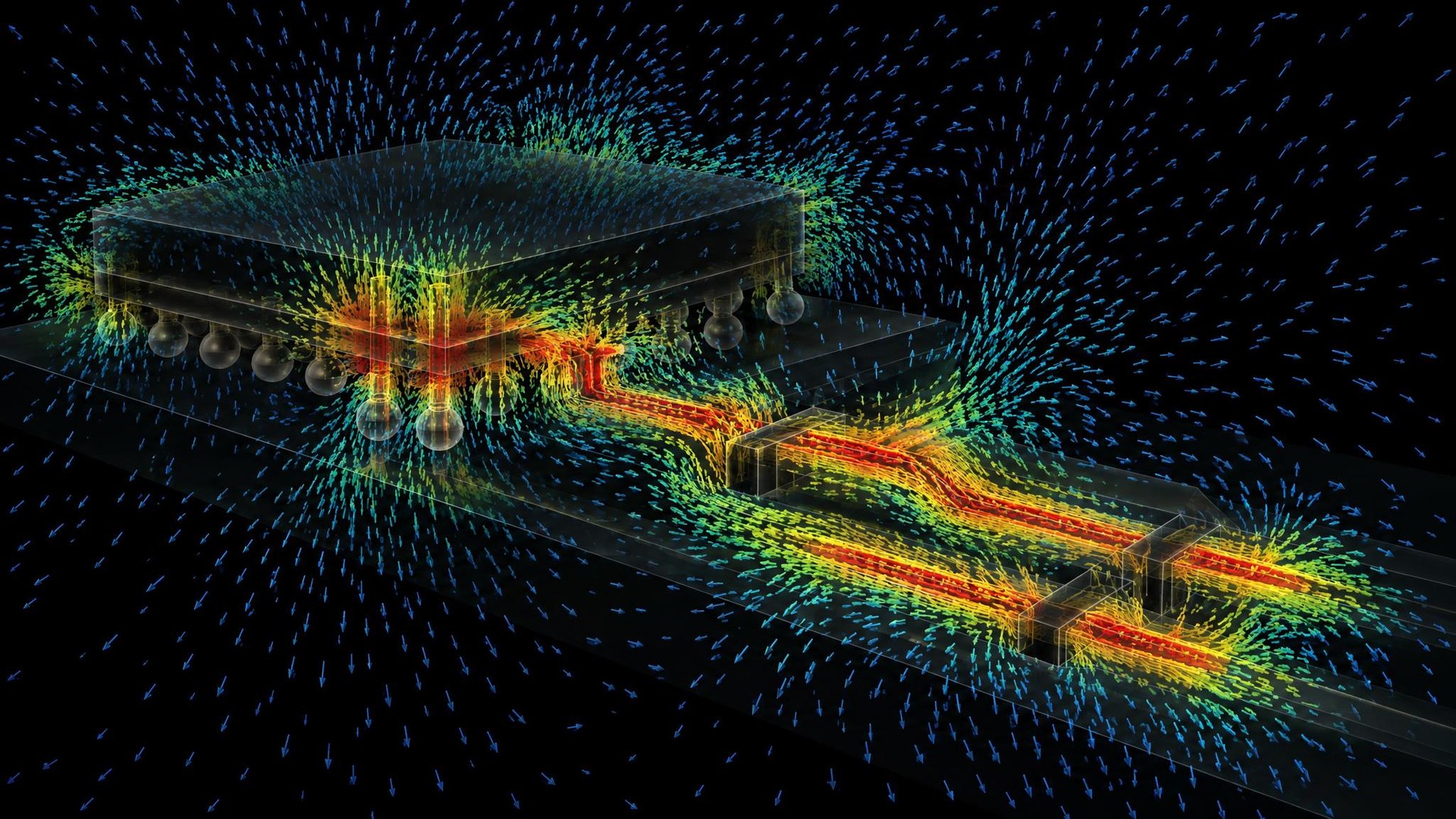
Arena Physica said in an October 13, 2026 announcement that Heaviside, its foundation model for electromagnetism, is now available on Microsoft Discovery, which the announcement describes as Microsoft’s platform for agentic engineering. According to the company, the model predicts full 3D electromagnetic field responses in milliseconds, roughly 100,000 times faster than a traditional solver.
The announcement frames the work around what the company calls the verification problem in electromagnetic design. Every electromagnetic design problem, the company writes, reduces to a single question: how the design will actually behave once built. Answering it currently means handing the geometry to a full-wave field solver and waiting hours or days for one run. Verification, rather than the design itself, is what makes that loop so hard to speed up and, in the company’s account, the reason AI has struggled to accelerate electromagnetic design.
According to the announcement, Heaviside-1, released in early September, is a 350 million parameter model trained on 250,000 3D field simulations spanning 500 billion individual field samples. Given a structure’s geometry, materials, and excitation, the model returns the full 3D electromagnetic field response, and the company says its predictions land within a decibel of commercial accuracy.
“Heaviside is built to learn electromagnetic fields, the solution to the underlying physics governed by Maxwell’s equations, directly,” said Michael Frei, Chief Research Officer at Arena Physica. He added that electromagnetic design has been gated by scarce expertise and slow solvers for decades.
How Heaviside Works on Microsoft Discovery
The announcement says Heaviside connects into Discovery’s existing ecosystem through a direct connection to high-performance compute, letting an agent move between Heaviside’s real-time predictions and a full-fidelity traditional solver when a design requires final validation. Because electromagnetic designs can contain sensitive IP (the announcement gives the examples of an antenna for a defense program and the interconnect layout inside an unreleased chip), the company points to Discovery’s governance controls, including audit logging, access controls, and Microsoft 365 integration, as important considerations for enterprise leaders adopting the model in their design workflows.
Microsoft’s documentation describes Discovery as an extensible platform that brings together agentic orchestration, advanced reasoning, a graph-based knowledge foundation, and high-performance computing. Built on Azure’s enterprise cloud infrastructure, the platform is designed to operate within the security, compliance, transparency, and governance frameworks used to manage sensitive R&D environments, the documentation states. Its built-in governance controls provide centralized management, audit trails, and checkpoints, and the platform integrates with Microsoft 365, Microsoft Foundry, and Microsoft Fabric. Discovery is available as an enterprise cloud service and as a standalone desktop application.
Preeth Chengappa, Head of Industry, Semi & Physics, Microsoft Discovery, said in the announcement that AI is accelerating more of the hardware design process, while electromagnetic verification remains a critical bottleneck, particularly for signal integrity, thermal and EM co-design, and high-speed packaging.
September Release and EMVal Benchmark Results
Heaviside-1 arrived in early September. A technical publication dated September 1, 2026 introduced it as the successor to Heaviside-0, which the company released in March alongside its Atlas RF Studio software. According to the publication, Heaviside-1 expanded from Heaviside-0’s 2.5D planar structures to fully 3D geometries and predicts full 3D electric and magnetic vector fields from a structure’s geometry, material properties, and excitation patterns. The publication describes the model as more than ten times the size of Heaviside-0 and roughly the size of GPT-2.
Because electromagnetism foundation models have no existing benchmarks to borrow, the publication states, Arena Physica also introduced EMVal v1.0, a benchmark suite with an S-parameter track called EMVal-SP and a near-field track called EMVal-NF. The company maintains private standard and challenge evaluation splits and has released a public version of the standard split on Hugging Face.
The publication reports that on geometry families represented during training, Heaviside-1 predicts fields with about 19 percent global error and 22 percent median local error, figures that rise to about 33 percent and 28 percent on entirely unseen families, with median vector alignment around 98 percent. Training with full-field supervision, the publication reports, cut out-of-distribution S-parameter error from 0.99 dB to 0.53 dB relative to an otherwise identical model trained only on S-parameters.
Target Applications and Company Plans
The announcement identifies semiconductors as a strong opportunity, saying Heaviside can accelerate electromagnetic verification across the structures semiconductor teams design, including BGA packaging and SerDes interconnects, the signal paths connecting a die to the rest of a system.
“I’ve spent decades designing RF and millimeter-wave chips, and the slowest step of the process has always been waiting on electromagnetic simulation,” said Harish Krishnaswamy, Chief Scientist at Arena Physica. He said Heaviside returns that answer in milliseconds, so engineers can verify designs almost instantly, and that he looks forward to semiconductor teams on Discovery applying that speed to work such as advanced packaging and interconnect design.
Arena Physica, founded in 2019 and based in New York City, describes itself as an electromagnetic superintelligence company and Heaviside as the first foundation model for electromagnetism, and says it works with hardware companies including AMD, Anduril, and Bausch + Lomb. The September publication states that the company plans to add more downstream physical targets to Heaviside, starting with far-field radiation patterns, and that the model is available through the Atlas Fields Studio beta.