
Source: Unite.AI
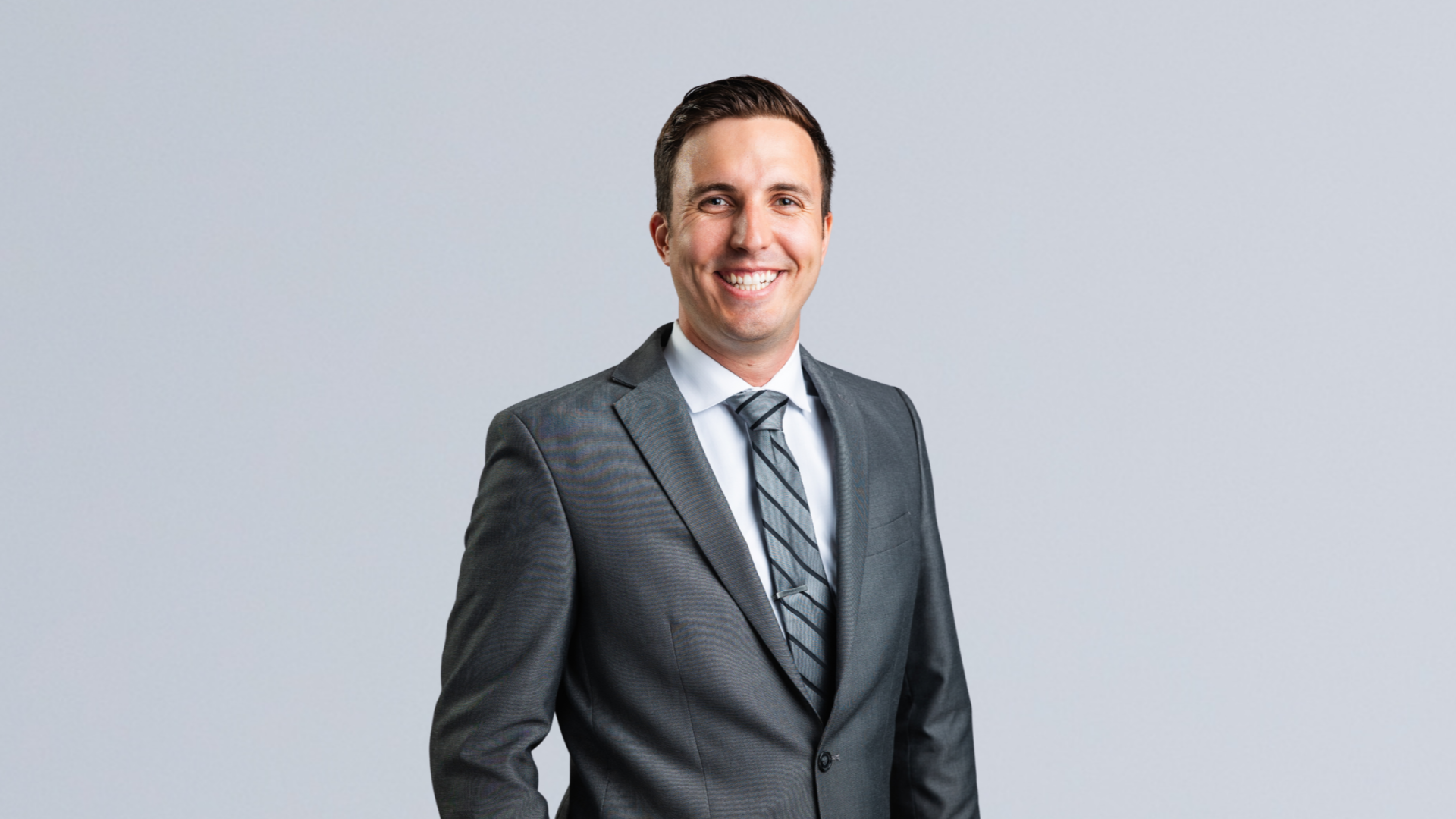
Troy Morris, Co-Founder and CEO of KMI Space, leads the company’s strategy, operations, partnerships, and growth as it develops technologies for in-space mobility and orbital sustainability. A co-founder of the company since 2019, Morris initially served as Director of Operations before becoming CEO in 2023, helping KMI grow from a bootstrapped startup into a space technology company that has successfully demonstrated hardware aboard the International Space Station. Under his leadership, KMI’s REACCH capture system spent more than 200 days in orbit and completed 172 capture cycles during six ISS testing sessions, validating key technologies designed for future satellite relocation, servicing, and debris-removal missions. Before founding KMI Space, Morris spent more than four years at Snap-on Tools in customer service, product sales, and business development roles, earning recognition for exceeding sales targets and contributing to company-wide operational initiatives.
KMI Space is a Michigan-based space technology company developing Relocation as a Service (RaaS) infrastructure designed to move, service, extend the life of, and ultimately remove objects in orbit. Its technology portfolio includes REACCH, a mechanically articulated capture system that combines adaptive mechanics with gecko-inspired adhesion to securely capture objects without requiring a purpose-built docking interface, as well as the planned Laelaps spacecraft platform that will use REACCH to perform end-of-life services, orbit changes, and active debris removal. The company envisions eventually operating a reusable fleet across near-Earth orbit, supported by its proposed Shepard collection station, as part of a broader effort to make orbital logistics more flexible and sustainable.
You co-founded KMI in 2019 alongside Austin Morris and Adam Kall. What originally brought the three of you together around the idea of building a space company, and why did orbital debris and in-space logistics emerge as the problem you wanted to solve?
Austin, Adam, and I were friends during undergrad, and we reconnected in 2019 after starting our own careers. We were all doing well, but we shared this lifelong passion for space and started asking ourselves: What’s next?
At the time, reusable launch was becoming a reality. It felt like the future we had talked about growing up was suddenly here. So, after work and on weekends, we started thinking about what comes after launch. If we can reliably put things into space, what infrastructure will we need once they’re there?
We would throw around ideas like space hotels, larger spacecraft, and other concepts that sounded like science fiction, and we kept running into the same issue: orbital debris. Almost anything ambitious you want to build in space eventually has to deal with objects already in orbit and safely move around them.
We started looking for companies tackling that problem in the way we envisioned and couldn’t find one, particularly in the United States. So, instead of waiting for someone else to solve it, we started working on it ourselves. That ultimately became KMI and grew from thinking primarily about debris into a much broader question of mobility and logistics in space.
REACCH is designed to capture objects that were never built with docking or servicing in mind. What makes capturing an unprepared object in orbit so difficult, and how does REACCH’s approach differ from more traditional robotic arms or docking systems?
Capturing something in space is difficult before you even consider whether it was designed to be captured. You have six degrees of freedom, you’re dealing with objects moving in microgravity, and the object you’re approaching could be a very large and valuable piece of hardware.
Traditionally, solving that problem can require very large, complex robotic systems. Those systems have demonstrated incredible capabilities, but we’re looking at the next evolution: How do we make capture simpler, lighter, less power-intensive and ultimately more scalable?
I sometimes compare it to the evolution of computers. Early computers could fill an entire room. Today, we carry incredibly capable computers in our pockets. We’re looking for a similar step change in orbital servicing.
We’re not trying to perform eye surgery in space. We’re building a forklift or a tow truck. The goal is to safely approach an object, capture it and move it without requiring an enormous specialized system every time. That means going back to first principles around weight, power, cost and complexity and asking what customers actually need from a servicing mission.
REACCH spent more than 200 days in orbit and completed over 170 capture cycles during demonstrations aboard the International Space Station. What did those tests teach you that could not have been learned through simulations or testing on Earth?
There’s a reason people in this industry say, “Space is hard.” You can simulate and test extensively on Earth, but eventually you have to put hardware into the actual environment and see how it behaves.
One of the biggest lessons for us was simply how much we could learn through repetition. REACCH operated for more than 200 days, and we completed approximately 170 capture cycles without a mechanical error. We even disabled one of the four tentacles and continued capturing successfully with the remaining three.
That gave us opportunities to test edge cases we couldn’t necessarily anticipate months earlier when the hardware was delivered. Space hardware has long development timelines. You may build something months before testing, wait months for launch, and then wait again before operating it. Once you’re there, you want to learn as much as possible.
Instead of getting one attempt and hopefully learning one lesson, we could repeat the process again and again. Every capture gave us another opportunity to understand how the system behaves in microgravity and improve what comes next.
KMI was recently selected for the SpaceWERX 2026.1 STRATFI program. What does that selection enable you to do next, and what technical or commercial milestones are you hoping to reach through the program?
The goal through STRATFI is to move toward a tested and trusted spacecraft capability that isn’t something we build once. We want something we can build repeatedly.
I think about it a little like the Model T. First, you prove that the vehicle works and can get down the road. Then you build the assembly line and demonstrate that you can produce more of them reliably.
That’s important technically, but it’s equally important commercially. Something can be incredibly cool technology and still not be a viable business. We need to demonstrate that the spacecraft works, that we can produce it efficiently, and that it can perform missions customers actually need.
One of our quieter goals at KMI is to make these operations mundane. Capturing and relocating something in space shouldn’t always have to be a decade-long, one-of-a-kind engineering project. Eventually, we want it to feel much more like calling a tow truck or shipping a package: highly technical behind the scenes, but reliable and routine for the customer.
KMI describes its broader model as “Relocation as a Service,” spanning end-of-life services, orbit changes, and active debris removal. How do you envision that service working for a satellite operator in practice, and where do you see the strongest near-term commercial demand?
The strongest near-term commercial opportunity we see is helping operators get more value out of satellites that are already working in space.
Think about what it takes to get a satellite there. An operator may have invested hundreds of millions of dollars to design, test, launch, and operate it successfully. If that satellite is still productive but needs to be relocated or otherwise serviced to keep operating, extending its useful life can be incredibly valuable.
That’s where Relocation as a Service becomes very practical. Rather than every satellite having to solve every mobility challenge on its own, an operator could use an external service to move an asset, extend its life, replace it or eventually handle its end-of-life needs.
There will certainly be highly visible missions involving debris or protecting critical assets, but I think a lot of this industry will eventually look much more mundane. It will be moving a satellite, replacing one, or pushing one into a different orbit so it can continue providing value. It’s the boring logistics that keep everything else moving.
REACCH ultimately needs to operate as part of a spacecraft capable of approaching, capturing, and relocating another object. How does the technology integrate with KMI’s Laelaps spacecraft, and what needs to happen before that complete system can become an operational service?
REACCH provides the capture capability, while Laelaps helps turn that capability into a complete mobility service. Ultimately, you need a spacecraft that can launch, safely approach another object, capture it, and then relocate or service it.
There are technical pieces, but there are also practical constraints: launch availability, manufacturing efficiency, skilled labor, and supply chains. Those details aren’t always as exciting as the hardware, but they’re critical if you want to turn a demonstration into an operational service.
Beyond that, I’m particularly excited about the infrastructure that could develop around these spacecraft. If we’re building tow trucks for space, you’ll eventually want the equivalent of gas stations and repair shops, too.
Imagine being able to move a satellite to an orbital logistics station where it could receive fuel, a replacement battery, or another service. Infrastructure like that changes the economics considerably. It turns individual servicing missions into an ecosystem.
Where is KMI using, or planning to use, artificial intelligence in its systems? Are areas such as autonomous rendezvous, object recognition, trajectory planning, or real-time capture decisions particularly well suited to AI?
At KMI, we’re actually pretty careful about how we use the term AI. Automation is probably the term we use more often.
One of our co-founders, Adam Kall, worked with neural networks at NASA before what we now broadly call machine learning, or AI, became such a common part of the technology conversation. Because of that background, we’ve always looked critically at where AI genuinely adds value versus where someone has simply developed a very good algorithm.
Automation is already fundamental to what we’re doing. Spacecraft have to perform complex operations when humans aren’t physically present, and automation can help missions operate faster, more consistently, and more reliably.
There are certainly opportunities across rendezvous, navigation, trajectory planning, and other areas, but we’re interested in applying these tools where they actually improve the mission rather than using AI simply because AI is popular. We’re operating at the edge of what’s technically possible, so sometimes there isn’t an existing model with the answer. We still have to develop new algorithms, test them, and rely on good old-fashioned human intelligence.
Your ISS demonstrations generated a substantial amount of data on how REACCH behaves in microgravity. How can AI, simulation, or machine learning help you extract more value from that data and improve the autonomy and reliability of future missions?
We were already using machine learning before REACCH ever operated aboard the ISS. We used machine-learning systems to help train algorithms that would then run during the demonstration. We weren’t running live AI aboard the space station; NASA and our team appropriately had safety considerations around doing that.
These tools become incredibly valuable at scale. You can train and test an algorithm across a volume of scenarios that would be impractical to reproduce manually.
Then we brought back a tremendous amount of real-world data from the ISS, including more than 24 hours of video around the capture operations and additional data from the demonstrations.
I compare it to having 24 hours of video of Michael Jordan shooting free throws. That’s a tremendous amount of information about one specific action, and then you also have everything happening before and after each shot.
That real microgravity data helps us anchor our models. We can compare what we expected to happen with what actually happened, refine the algorithms, and use those lessons to improve future versions of the technology. That’s where machine learning, simulation and real-world testing become particularly powerful together.
Active debris removal has an unusual business challenge because the organization paying to remove an object may not be the organization that originally put it there. How do you think the commercial, regulatory, and government roles need to evolve for debris removal to become a scalable market rather than a series of one-off missions?
It’s easy to look at a challenge like orbital debris and immediately say government should create the market or require everyone to use a particular service. I don’t think that’s necessarily the only path.
Think about something as simple as a fire extinguisher. I have multiple fire extinguishers in my house because they protect my family and my home if something goes wrong. There’s an obvious value proposition around reducing risk.
We’ve heard something similar from commercial satellite operators: demonstrate that the technology works, that using it makes their operations safer, easier, or more economical, and that there’s a business reason to use it.
Government will continue to have important roles, particularly around critical assets and situations where debris poses broader risks. But commercially, our focus is on proving the capability and making it available and affordable enough that using a servicing provider becomes an easy business decision.
Once you demonstrate that successfully, you can expand across different customers, use cases, and orbital locations. That’s how this becomes a network and a market rather than a collection of individual demonstration missions.
As the number and value of spacecraft in orbit continue to grow, how do you see in-space servicing and logistics evolving over the next decade, and what would need to happen for orbital “tow trucks” and relocation services to become routine infrastructure rather than specialized missions?
Ten years from now, I’d like orbital servicing to feel much less extraordinary than it does today.
We anticipate having multiple servicing spacecraft available, whether they’re already in orbit or ready to launch, and potentially seeing the development of orbital logistics stations. Instead of asking, “Can we find someone capable of building a special mission to solve this problem?” an operator could simply select the service it needs.
But what excites me even more is what that infrastructure allows future satellites to become.
Today, satellites essentially have to backpack through the wilderness. They carry the fuel, redundancy, and equipment they may need because once they’re launched, they’re largely on their own. Compare that with traveling on Earth. If I’m driving to Washington, D.C., I don’t have to bring all the food, fuel, and supplies I’ll need for the entire trip. There’s infrastructure along the way.
That’s what creates an ecosystem.
If spacecraft can rely on external mobility, refueling, servicing, and other infrastructure, we can start designing them differently. The impact isn’t simply that KMI has tow trucks in orbit. It’s that the entire space ecosystem can evolve around available logistics and support.
Ultimately, these services need to be scalable, successful, and fast enough that customers can rely on them. When that happens, calling a tow truck in space shouldn’t feel much stranger than ordering a pizza or getting a ride to the airport does today.
Thank you for the fascinating interview, readers who wish to learn more should visit KMI Space.