Source: Unite.AI
n8n released Nod on November 10, 2026, as a research preview for Mac and Windows. The free, open-source personal agent comes from the new n8n Labs team and can carry out tasks in a user’s apps and on websites from a private sandbox running on that person’s computer.
Nod has its own browser and can sign in to websites that have no formal integration. Its code is published under Apache 2.0, and it does not require an n8n account or an initial server or cloud-service setup, although users must connect an AI provider. n8n Labs is a new team for experiments outside the core product. n8n said development of that product and the n8n agent would continue as planned.
A Standalone Agent for Individual Work
The product broadens n8n’s automation focus beyond shared team processes to jobs handled by one person. Nod connects to that person’s accounts for business or household work and is neither an n8n workflow nor the n8n AI Assistant. Existing n8n users can optionally connect an instance so the agent can work with their workflows.
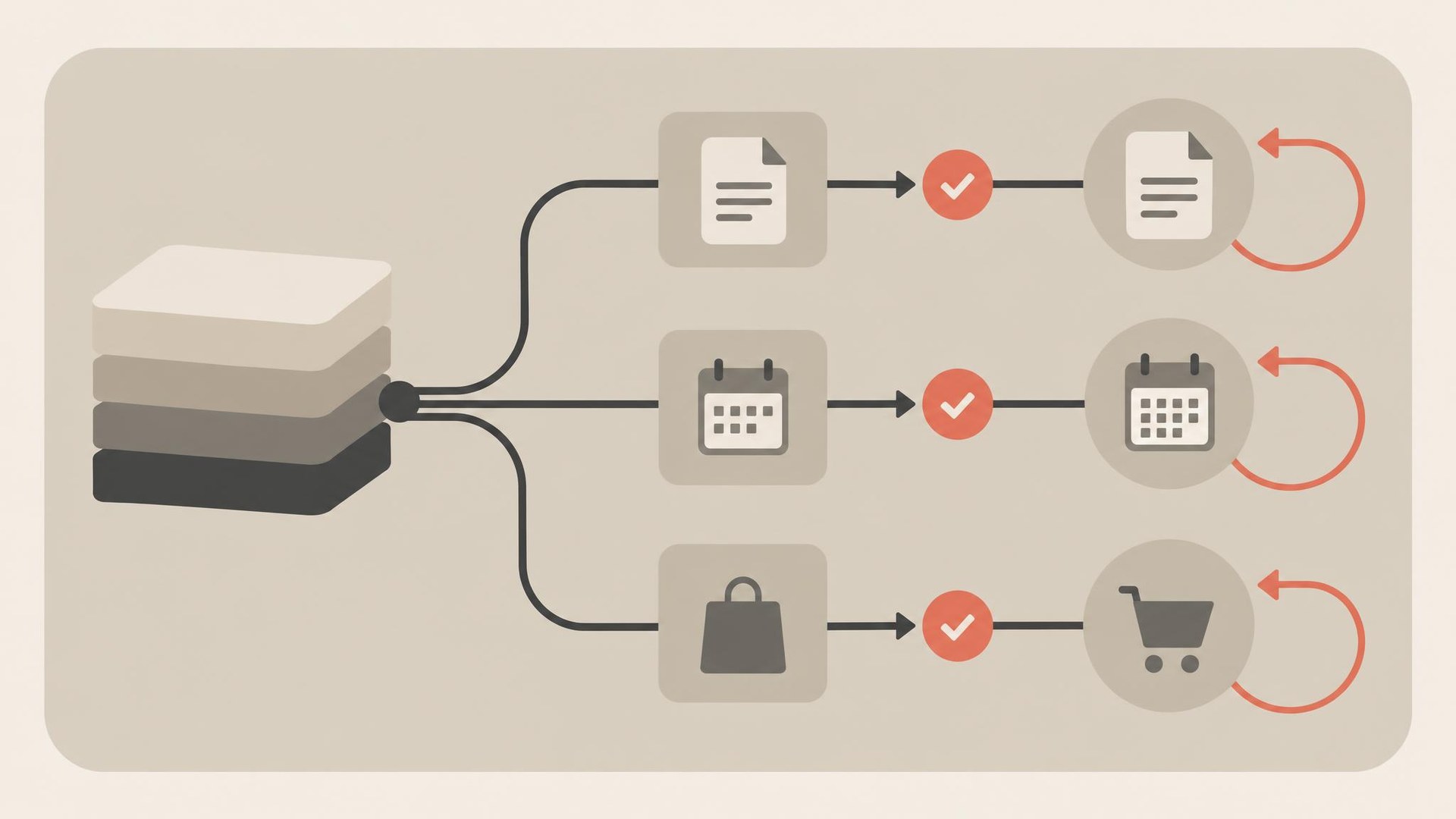
Examples include cancelling a subscription and requesting a refund, retrieving invoices from supplier portals, watching prices and extracting figures from dashboards without export functions. The documentation also describes web and PDF research, creation of documents, spreadsheets and code in a Linux workspace, and reading or drafting in Gmail, Calendar, Slack, Notion and Linear.
Users can maintain one conversation in the app, Telegram or WhatsApp while several jobs run in parallel. Recurring work such as morning briefs and price checks can run on schedules, and Nod can propose jobs after reading connected apps.
Nod retains months of conversation and records how it completed tasks, reusing those notes and revising them when a site changes. It can learn a user’s writing style from sent Gmail messages, and users can inspect, edit or delete stored information. n8n’s GitHub repository reports a 93.2% LongMemEval score, up from 79%, using 500 questions about earlier chats answered in a fresh session.
The LongMemEval methodology tests information extraction, multi-session reasoning, knowledge updates, temporal reasoning and abstention when information is unknown. The score therefore concerns long-term memory, not how reliably Nod completes a booking or refund.
Approval Checks and Local Data Boundaries
Before Nod sends, pays, posts or deletes anything not covered by the user’s request, a separate model-based check asks for confirmation. A web page or email cannot give it authority. n8n cautions that this check is itself a model and can make mistakes, making the approval step a safeguard rather than a guarantee of correct judgment.
Saved logins and payment cards are encrypted on the machine and entered through private forms the model cannot read. Nod also logs sign-ins, card use, actions in connected apps and model costs, creating an activity record alongside the approval controls.
Nod’s database, files, memory and saved logins remain on the machine running it, while the selected AI provider receives the information needed for each task. The product site adds that app connections pass through a connection service and that, beyond update checks, information goes to n8n only when usage data is enabled or feedback is submitted.
Usage Costs and Research-Preview Limits
Nod itself is free, but users pay their chosen model provider for usage or connect an open-source model running locally. Supported connections include OpenAI, Anthropic, OpenRouter, Amazon Bedrock, Google Vertex AI and Azure OpenAI; ChatGPT Plus and Pro plans are also supported.
Cost controls include a receipt for each finished task, a monthly spending limit, an adjustable check-in once a task passes $5 and an estimated monthly cost for each schedule. Those controls matter because the preview supports scheduled and parallel work drawing on the user’s own model account.
The desktop download requires macOS 14 or later, while Windows 11 support is labeled a preview; self-hosting on a personal server is also available. A laptop installation stops when the laptop sleeps, so scheduled jobs require the machine to remain on. Each installation currently has one owner, and Nod cannot make phone calls. n8n lists a hosted version and shared team use as future work.
Nod gives n8n an open-source route into personal agents without making its workflow platform a prerequisite. The preview’s trade-off is clear: local control and provider choice come with direct model costs, an always-on machine for unattended schedules, and an approval mechanism that can still make mistakes.