Source: Unite.AI
Mosaic Intelligence Labs announced on November 10, 2026 that it had emerged from stealth with $47 million in seed funding to develop sensing-enabled spatial intelligence and robotic systems for surgery, initially focusing on procedures performed through the vascular system.
The San Francisco company named 8VC, Fundomo, Lingotto Innovation and Obvious Ventures among its backers. Chief executive Ileana Pirozzi and chief technology officer Alison “Ali” Kight Mackanic founded Mosaic after meeting during their doctoral studies at Stanford. Their work alongside clinicians exposed how difficult, less-invasive procedures often remain tied to knowledge held by individual operators.
“We kept returning to one question: what would it take to scale the knowledge of the very best surgeons?” Pirozzi said. “We believe that starts with making our machines aware, and turning surgical repetition into experience we can learn from.”
Starting With Endovascular Procedures
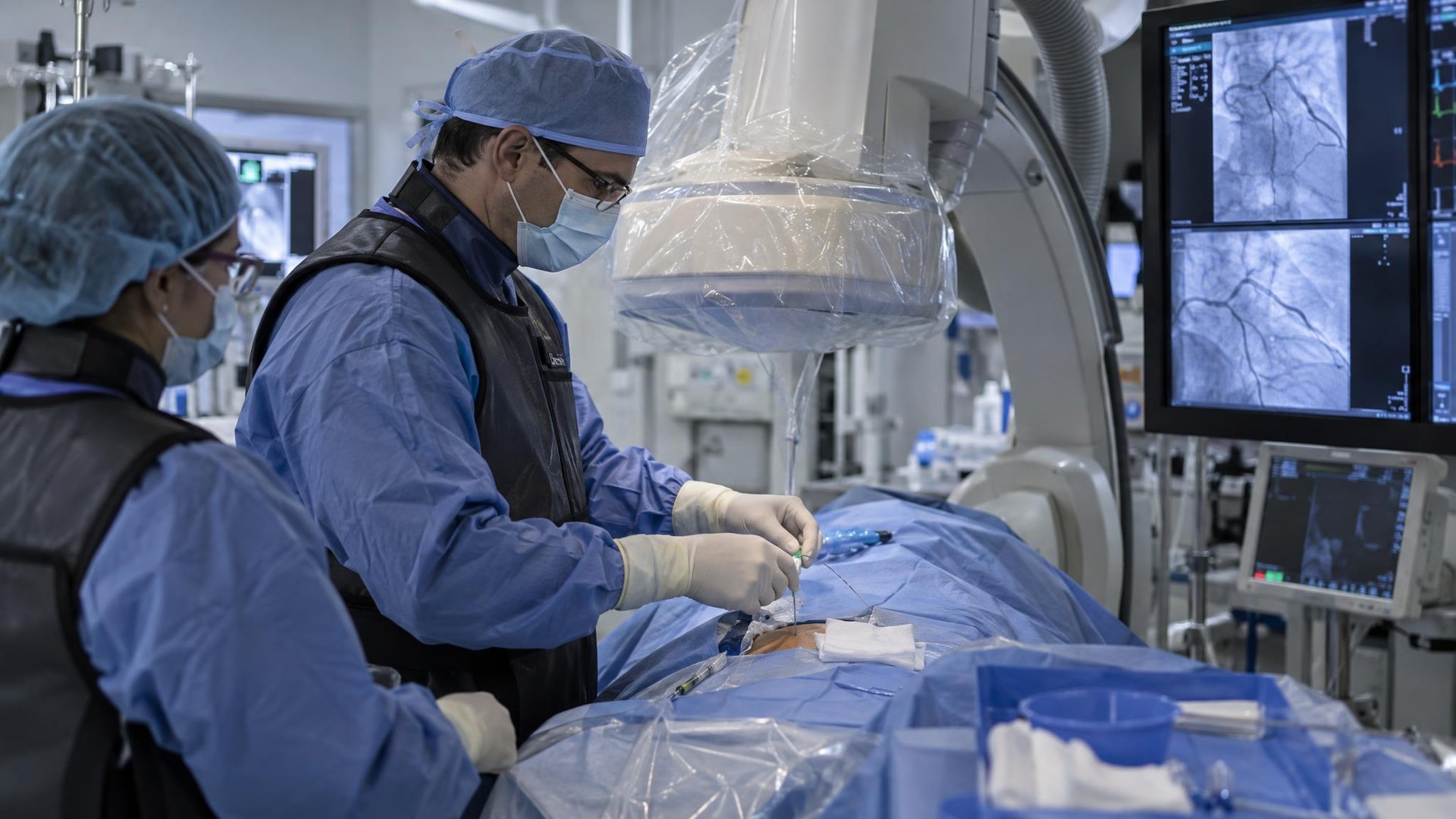
Mosaic’s initial target is endovascular care. In these procedures, physicians thread flexible wires and catheters through blood vessels to reach treatment sites. Mosaic describes blood vessels as routes to virtually every organ, yet operators have no direct line of sight inside them. They use live X-ray imaging, preoperative scans and the feel of the instruments to work out where they are and what lies ahead.
The company identifies radiation exposure and outcomes that vary with operator experience as limitations of that workflow. Interpreting the available signals can take years of practice, and much of the resulting knowledge is difficult to record or hand down. The result is a mismatch: surgical access has become less invasive, while navigation still depends heavily on the perception and judgment of the person holding the instrument.
For context, Mosaic’s website compares open surgery’s 20–30 cm incision and keyhole surgery’s 1–2 cm ports with endovascular surgery’s 2 mm needle puncture, and lists stopping strokes, clearing blocked coronary arteries, repairing aneurysms and restoring blood flow to limbs among current applications. That range helps explain why Mosaic is treating vascular navigation as a reusable capability across multiple procedures.
Giving Surgical Instruments a Learning Loop
The technical design begins by instrumenting the point where surgical tools meet anatomy. Mosaic intends to combine those sensor readings with computation that reconstructs the vascular environment from within, maintaining a three-dimensional picture of anatomy and instrument position as it changes. A robotic interface would support precise instrument control.
The learning architecture would record the environment, instrument movement and physician actions as synchronized streams. Physical models would then help the system relate what it senses to what happens when it moves. The release connects this approach to the robotics concept of a world model: a representation of an environment that helps a machine predict how its actions will change that environment.
All of these capabilities remain development goals; the announcement supplies no patient-outcome findings or clinical-performance results. The nearer objective is to assist physicians’ perception and control, while the recorded procedures are intended to become a source of cumulative learning for machines over time.
Recruiting and Longer-Term Treatment Goals
Mosaic is recruiting engineers, physicians and creatives in San Francisco. Open roles cover hardware engineering, sensing, perception, machine learning and clinical engineering, matching a technical effort that spans physical instruments, software, robotics and clinical practice.
Mosaic’s longer-term goal is to widen the treatments delivered through these vascular routes. The company says catheters can deliver drugs, energy, biologics and other therapies directly to a target site, and that more reliable navigation could expand both the range of treatments delivered through blood vessels and the settings in which clinicians can offer them.
Mosaic’s near-term product challenge and longer-term data ambition are linked: dependable navigation must work in individual procedures before those procedures can provide a useful foundation for cumulative machine learning.