
NVIDIA Introduces X-Token: Projection-Guided Cross-Tokenizer KD That Outperforms GOLD by +3.82 Average Points on Llama-3.2-1B
Source: MarkTechPost Knowledge distillation (KD) transfers “dark knowledge” from a large teacher model to a smaller student. The...

StepFun Releases Step 3.7 Flash: A 198B MoE Vision-Language Model for Coding Agents and Search Workflows
Source: MarkTechPost StepFun today released Step 3.7 Flash, a multimodal Mixture-of-Experts model targeting agentic use cases. It adds...

Meet mKernel: A Multi-GPU, Multi-Node Fused Kernel Library for GPU-Driven Communication
Source: MarkTechPost GPU communication overhead is a measurable bottleneck in production AI workloads. According to data cited by...
Liquid AI Releases LFM2.5-8B-A1B: An On-Device MoE Model With 8.3B Total and 1.5B Active Parameters
Source: MarkTechPost Liquid AI just shipped LFM2.5-8B-A1B. It is an on-device Mixture-of-Experts (MoE) model built for tool calling....

Anthropic Ships Claude Opus 4.8 Alongside Dynamic Workflows and Cheaper Fast Mode, With Workflows Capped at 1,000 Subagents
Source: MarkTechPost Anthropic just launched Claude Opus 4.8. Also, there two Claude Code updates shipped with it. Dynamic...
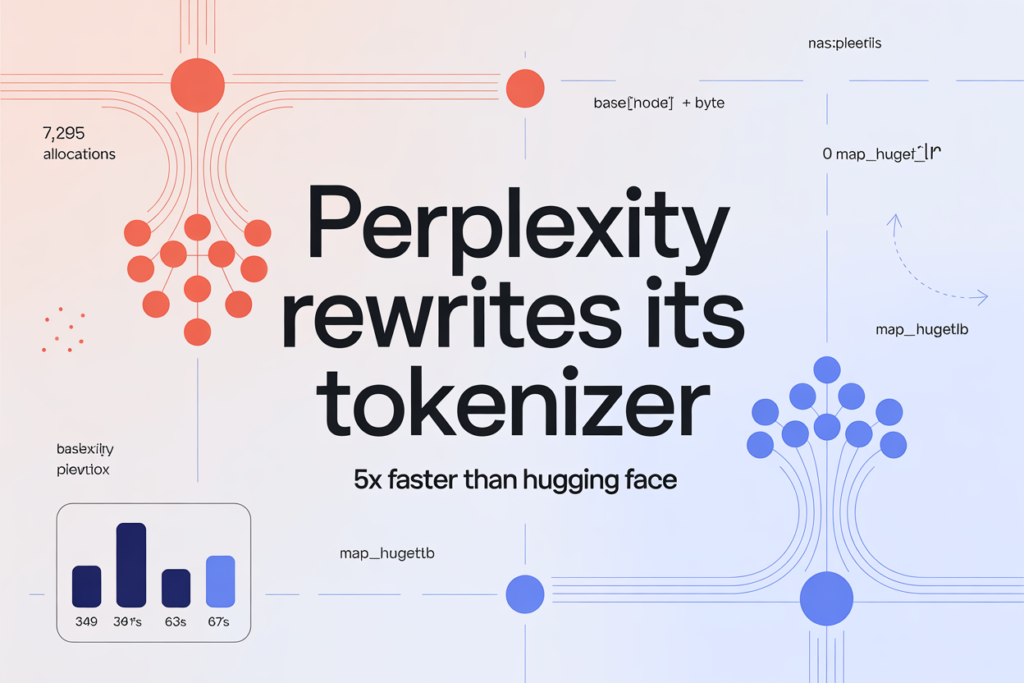
Perplexity AI Open-Sources Unigram Tokenizer That Achieves 5x Lower p50 Latency Than Hugging Face tokenizers Crate
Source: MarkTechPost Perplexity AI’s research team reimplemented their Unigram tokenizer from scratch in Rust and open-sourced the code...

A Coding Guide to Implement a pgvector-Powered Semantic, Hybrid, Sparse, and Quantized Vector Search System
Source: MarkTechPost In this tutorial, we build a complete pgvector playground inside Google Colab and explore how PostgreSQL...
NVIDIA Releases Polar, a Token-Faithful Rollout Framework for GRPO Training Across Codex, Claude Code, and Qwen Code
Source: MarkTechPost Reinforcement learning for language agents is growing more complex. Agents now manage multi-turn tool use, long-running...
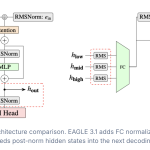
Meet EAGLE 3.1: The Speculative Decoding Algorithm That Fixes Attention Drift in LLM Inference
Source: MarkTechPost Speculative decoding is a technique for speeding up large language model inference. A small, fast draft...
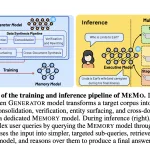
MEMO: A Modular Framework for Training a Dedicated Memory Model on New Knowledge Without Modifying LLM Parameters
Source: MarkTechPost Large language models become static after pretraining. Their knowledge does not update as the world changes....