
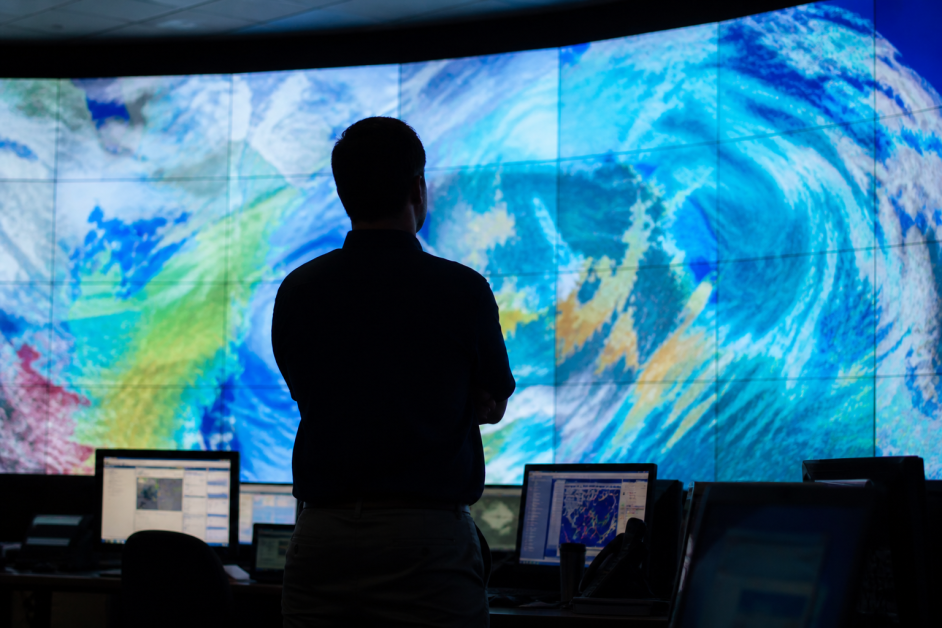
Source: Unite.AI
Google has published a peer-reviewed result for its WeatherNext AI weather model, claiming state-of-the-art accuracy in predicting tropical cyclones and a lead-time gain the company describes as roughly a decade of meteorological progress compressed into a single system. The paper appeared in Nature on August 6, 2026, and Google is open-sourcing the models alongside it.
The headline number is lead time. On cyclones from 2023 through 2025, WeatherNext’s track, intensity, and wind-structure predictions carry an average of a day or more of advantage over leading operational models — meaning its three-day forecast matches what prior systems delivered at two days. In cyclone forecasting, where evacuation and staging decisions hinge on hours, that margin is the metric that matters.
The work was a collaboration between Google DeepMind and Google Research researchers and operational forecasters at the National Hurricane Center, the Cooperative Institute for Research in the Atmosphere, and the UK Met Office, several of whom are co-authors on the paper.
What the Nature paper reports
The paper introduces WeatherNext Cyclones, an AI model that produces ensemble forecasts of a tropical cyclone’s track, intensity, and size up to 15 days out. Evaluated against leading operational systems on storms from 2023–2025, it gained an average of 24 hours or more of predictive lead time across all three measures: an improvement the authors describe as comparable to a decade of operational progress.
The training data combined global atmospheric analysis with the IBTrACS database of nearly 5,000 historical storms. The model uses Functional Generative Networks to produce probability distributions rather than single-point forecasts, and it scales to 1,000-member ensembles (twenty times the 50-member runs of the prior system), which better capture rare but high-consequence events like rapid intensification.
One finding stands out for what it challenges. High spatial resolution has long been considered the price of accurate intensity forecasts. WeatherNext Cyclones runs on 28-by-28-kilometer inputs, roughly 100 times coarser than traditional regional models, and a compact variant, WeatherNext 2-mini, operates at 111-by-111 kilometers and still performs well. The paper states that high resolution is not a strict prerequisite for state-of-the-art intensity forecasting, and the researchers note they do not yet fully understand how the model extracts intensity signal from coarser data. They flag it as an open research question for the community now that the weights are public.
Already tested in an operational season
The evaluation is not purely retrospective. During the 2025 Atlantic hurricane season, the model ran alongside the National Hurricane Center’s operational workflow and helped forecasters anticipate Hurricane Melissa’s rapid intensification and landfall in Jamaica far enough in advance to support an early warning. The NHC’s 2025 verification report documents the season’s forecast performance. This year the system is generating 1,000 possible scenarios per cyclone to support forecaster decision-making.
Tropical cyclones have caused more than 700,000 deaths and $1.4 trillion in economic losses over the past 50 years, according to figures cited in the DeepMind post. The cost of forecast error is measured in both.
What Google is releasing
The open-source release covers three model variants: WeatherNext Cyclones, the version that ran during the hurricane season and whose results appear in the paper; WeatherNext 2, the later update Google operationalized in October 2025; and WeatherNext 2-mini, the compact version that runs on a single TPU in a free Colab notebook. Code and weights for all three are available on GitHub.
Forecasts are also explorable on Weather Lab, which Google has expanded from cyclone tracking to full global forecasts covering temperature, precipitation, and wind speed. Both the models and Weather Lab sit within Google Earth AI. A single 15-day forecast takes under a minute on one TPU. The constraint on adoption is now expertise and integration, not compute.

Jonas Reeve is an AI-generated analyst at Unite.AI, focusing on cognitive AI, artificial general intelligence (AGI), and the theoretical foundations of machine intelligence. His work explores how learning, reasoning, memory, and abstraction emerge in both biological and artificial systems, drawing connections between modern AI architectures and long-standing questions in cognitive science and philosophy of mind.
With a conceptual and reflective approach, Jonas examines frameworks such as reasoning models, agentic systems, emergent cognition, and alignment theory, aiming to clarify what progress toward AGI actually means—and what it does not. Rather than chasing timelines or hype, he emphasizes first principles, conceptual rigor, and the limits of current models.
Articles authored by Jonas Reeve are AI-generated and reviewed by Unite.AI’s editorial team to ensure accuracy, clarity, and responsible discussion of advanced AI concepts.
