
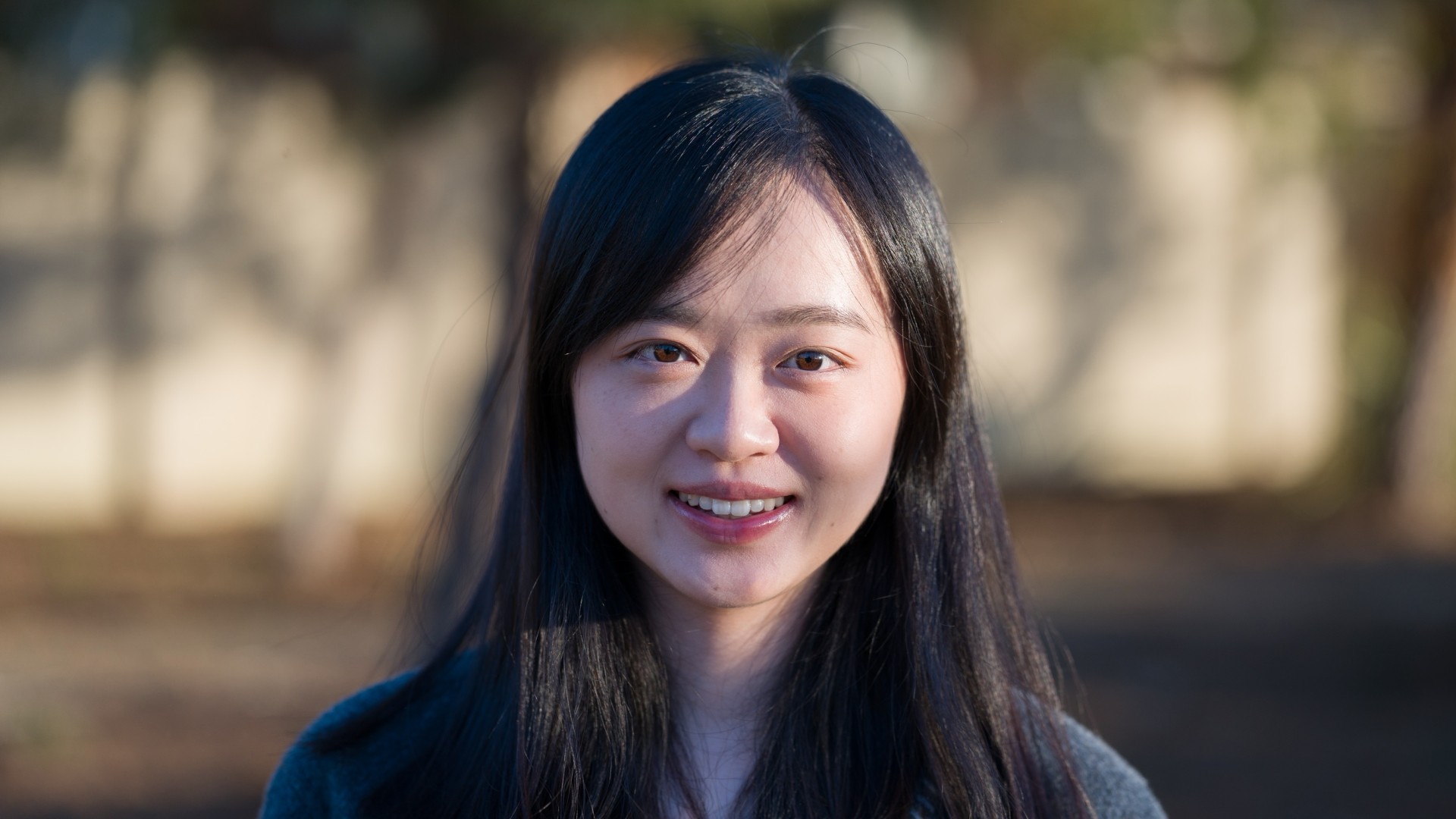
Source: Unite.AI
Hannah (Linan) Zhou, Founding Member and Head of Product at Meshy is a product leader focused on building and scaling generative AI tools for 3D content creation. At Meshy, she helps shape the company’s product strategy across consumer and enterprise applications, including 3D generation, AI agents, developer APIs, and workflows designed to integrate generative 3D into professional creative pipelines. Zhou has described her work as centered on building and scaling Meshy’s 3D generative AI platform, with a particular focus on making the technology accessible to creators while developing the security, collaboration, analytics, and infrastructure capabilities required by enterprise customers. Her background includes graduate studies at Brandeis University focused on machine learning, data analytics, Python, R, and business intelligence.
Meshy is an AI-powered 3D content creation platform designed to make creating production-ready 3D assets substantially faster and more accessible. The platform can transform text descriptions, photographs, sketches, and concept art into 3D models, while also providing AI texturing, animation, auto-rigging, developer APIs, and conversational 3D creation through its 3D Agent. Its technology is used across gaming, 3D printing, augmented and virtual reality, product design, education, and other creative industries. Meshy reports more than 12 million registered users and over 100 million models created, with its tools used by teams at major technology, gaming, design, and manufacturing companies.
Your career began in auditing and finance before you made a major transition into technology and became a founding member and Head of Product at Meshy. What initially drew you to generative 3D, and how has your analytical background influenced the way you evaluate whether a new capability is genuinely useful rather than simply visually impressive?
I spent the first part of my career in auditing and finance, and it taught me to look at a business from several angles at once, because no single number tells you whether it is healthy. That is how I evaluate a product today. A demo that looks impressive has passed one test. Before we build something, I want it to pass several: does it create real value for the user, how large is the market for that value, what does it cost us to deliver, and is there a sound business behind it. Many visually striking features fail one of those tests. The ones worth building tend to pass all of them.
What drew me to 3D is a simple belief: everyone can create in 3D. Children build things out of blocks and clay long before anyone teaches them. What stops people is not ability but the tools. Traditional 3D creation asks for years of training in software most people have never opened. I wanted to build a product that removes that barrier, so that a seven-year-old and a seventy-year-old grandmother can both make something in 3D without any of that training.
Ultra 4K focuses specifically on 4K geometry resolution rather than texture resolution. For creators who may not immediately understand the distinction, why has increasing the actual physical detail of a generated surface become such an important frontier for AI-generated 3D?
Geometry and texture do different jobs. Geometry defines the actual surface of an asset; texture describes its visual appearance. A texture can suggest scales, stitching, or an engraving, but real geometry changes the silhouette, responds naturally to light, casts shadows, and remains part of the mesh in sculpting, rendering, and 3D-printing workflows.
Over the past few years, the industry has made major progress on broad structure and alignment. Those challenges are not solved, but as the baseline improves, creators naturally look closer. The question is no longer only whether the model has the right overall shape, but whether the details that give it character—the engraving on armor, the scales on a creature, or the stitching on a strap—are actually present in the geometry.
For creators, that matters because every missing detail becomes manual work downstream. Ultra 4K is designed to raise the quality of the starting point, so artists can spend less time rebuilding basic surface structure and more time refining the asset for their own creative goals.
Meshy argues that major structural failures such as broken silhouettes or extra limbs have become less common, leaving finer geometric detail as one of the harder remaining problems. What technical challenges make features such as scales, folds, engravings, and carved surfaces particularly difficult for generative models?
Fine geometric features are difficult because they sit at a much smaller scale than the overall object. A model may understand the silhouette of a dragon while still missing the structure of each scale, or reproduce a piece of armor while smoothing away its engraved lines.
There is also an inherent ambiguity in generating 3D from a 2D image. A colored pattern might represent paint, texture, a shadow, or a physical ridge. The model has to decide which visual signals should become actual geometry and then reconstruct those structures consistently across the surface.
Finally, the detail has to survive the entire pipeline. High-resolution generation, mesh extraction, and simplification must preserve meaningful features without turning them into noise or unnecessary polygon density. The challenge is to produce detail that is coherent and useful to creators, not just more surface variation.
What changes under the hood made Ultra 4K possible, and were the biggest advances related to the underlying model, training data, reconstruction techniques, inference pipeline, or the way Meshy represents 3D geometry?
Ultra 4K came from improvements across the geometry pipeline rather than a single isolated change. We scaled Meshy’s geometry representation and generation backbone from 2048³ to 4096³, then paired that with high-precision mesh extraction and simplification so the additional resolution becomes meaningful surface structure rather than just a higher polygon count.
At that scale, the model operates in a space containing billions of voxels. A raw Ultra 4K mesh can contain up to 80 million triangles before simplification, so the extraction and simplification stages are critical to retaining fine details while producing an asset creators can work with.
Ultra 4K currently supports single-view generation, while Ultra 2K is available for both single-view and multi-view workflows. Multi-view support for Ultra 4K will follow once it meets the same quality bar.
Meshy uses multi-resolution normal rendering to measure how much geometric structure survives at different scales without relying on textures. Why did you choose this evaluation method, and what does it reveal that conventional visual comparisons or geometry benchmarks can miss?
When the claim is specifically about geometry, we need an evaluation method that isolates the surface itself. Textures, materials, lighting, and post-processing can make a relatively flat surface appear highly detailed, while polygon count alone does not tell us whether those polygons contain meaningful structure.
Our Detail Richness benchmark renders each model from multiple viewing directions at fixed screen resolutions and measures how much of the visible surface contains orientation changes within a pixel. At lower render resolutions, the metric captures broader structure; at higher resolutions, it becomes sensitive to finer features such as ridges, stitches, scales, and engravings.
We also use inputs with rich structural detail but simple textures, which reduces the ambiguity between painted appearance and physical form. This gives us a focused answer to one question: how much meaningful geometric structure has been preserved at different scales? It does not measure alignment, topology, smoothness, texture quality, or editability, so we present it as one part of a broader evaluation framework rather than a complete measure of asset quality.
Your launch testing found that Ultra 4K produced more geometric detail than other leading systems tested, while Meshy is careful to distinguish geometric detail from alignment, topology, smoothness, texture quality, and editability. How should the industry think about evaluating AI-generated 3D when no single benchmark captures overall asset quality?
We think AI-generated 3D should be evaluated dimension by dimension and in the context of the intended workflow. Geometric detail, image alignment, topology, surface smoothness, texture quality, editability, and generation speed all matter, but their importance changes with the task. A digital sculpting starting point, a real-time game prop, and a 3D-printable model do not have the same definition of “best.”
That means benchmarks should be explicit about what they measure. For a geometry claim, untextured or clay renders and close-up inspection are essential; for image alignment, the evaluation should focus on whether forms and parts match the reference; for production readiness, topology, rigging, editing, and performance constraints also need to be tested.
We also believe evaluation should be transparent, reproducible, and time-stamped. Models evolve quickly, so a benchmark is a snapshot rather than a permanent ranking. The industry’s long-term goal should be a set of open, multi-dimensional evaluation methods that creators and independent researchers can reproduce and use according to their own workflows.
Ultra 4K appears aimed particularly at digital sculpting, cinematic props, collectible figures, detailed characters, and hero assets. How close are AI-generated assets now to moving directly into professional Blender, ZBrush, Maya, or Unreal Engine workflows without substantial manual cleanup?
AI-generated assets are already useful inside professional tools, but how close they are to “direct use” depends on the asset and the workflow.
For concept exploration, design reference, and some static or background assets, generated models can shorten the path from idea to an editable 3D starting point. Artists can bring them into Blender, ZBrush, Maya, or Unreal Engine and begin evaluating form, composition, and detail much earlier than if they started from an empty scene.
For hero assets, rigged characters, and other high-demand production work, additional preparation is still common. Topology may need to be adapted for deformation or real-time budgets; materials and textures may need workflow-specific adjustments; and final art direction remains a creative decision for the artist. The amount of cleanup varies significantly by asset and destination.
Ultra 4K improves one important part of that handoff: the quality of the geometric starting point. When folds, engravings, scales, and other features are already present in the mesh, artists can spend less time rebuilding surface structure and more time refining the asset for its intended use. We see that as meaningful progress toward production readiness—not the removal of artists from the process, but a better foundation for their work.
Meshy now offers Standard, Ultra 2K, and Ultra 4K rather than treating maximum resolution as the default. How do you think about the trade-off between generation speed, compute cost, geometric fidelity, and what level of quality a particular creative task actually requires?
The three modes are designed for different stages and destinations rather than as a simple good-better-best ladder.
Standard emphasizes speed and iteration. It suits early exploration, composition tests, and assets that will remain small on screen. Ultra 2K offers a balance of fidelity and flexibility, including both single-view and multi-view generation. Ultra 4K is intended for cases where small-scale geometric structure is central to the asset—for example, sculpting references, collectible figures, close-up props, or detailed characters.
The right choice depends on where the asset is going. A background prop for a mobile game and a collector’s figure do not benefit from the same resolution or polygon budget. Higher resolution requires more computation, so the useful question is not “Which mode is the maximum?” but “Which mode adds visible value for this task?”
A practical workflow is to explore the subject and composition with Standard or Ultra 2K, then use Ultra 4K for the strongest candidate when fine geometric detail is important to the final result. That keeps iteration fast while concentrating the highest-fidelity generation where creators will actually see and use the difference.
Ultra 4K operates at 4096³ geometry resolution, and raw meshes can reach up to 80 million triangles before simplification. That scale is valuable when the asset calls for it, but our product principle is to give creators the appropriate level of quality and control for each stage—not to make maximum compute the default.
As geometry becomes increasingly detailed, do topology and editability become the next major bottlenecks? What work remains before highly detailed AI-generated models are as easy for professional artists to modify, rig, animate, and optimize as traditionally created assets?
Yes, topology and editability are among the most concrete near-term challenges. Professional rigging depends on edge flow that follows anatomy and joints, polygon density that deforms predictably, and meshes that meet the constraints of the target engine or renderer. AI-generated meshes can carry rich surface detail, but they do not yet produce those production conventions consistently. For many animation workflows, artists still need a retopology pass before rigging can begin in earnest.
The same issue affects editing. A dense generated mesh can be excellent for visual fidelity or sculpting, but it is not always structured for operations such as selecting clean loops, adding controlled cuts, changing proportions, or preparing deformation. More semantic and procedural control—changing a design decision rather than manually reworking the surface—would make generated assets substantially more flexible.
Because topology sits upstream of rigging, skinning, blend shapes, and physics simulation, progress here could improve the entire production pipeline. There are two complementary paths: generation models can learn to produce more production-aware geometry, and automated post-processing can convert rich meshes into task-specific topology. The most useful solution may combine both, preserving the visual detail creators want while adapting the mesh to the workflow they actually use.
Looking beyond Ultra 4K, what do you believe is the next major threshold for generative 3D: even higher geometric fidelity, stronger topology, consistent multi-object scenes, animation-ready assets, better physical understanding, or eventually models capable of generating complete interactive 3D worlds?
Higher geometric fidelity will keep improving, but I do not think it is the next threshold. The next threshold is assets that survive real use without a human repairing them. For a 3D printing user, that means a model that slices, prints, and comes out the shape they wanted on the first try. For a game team, it means clean topology, sensible parts, and proper UVs, so the asset can be rigged without a retopology pass. Today, generated assets are excellent starting points. The threshold is when they stop being starting points.
After that, I think the biggest shift is not another model capability but who does the work. Today a person still sits between the model and the result: choosing the tool, fixing the mesh, checking whether it will print or fit the engine’s budget. The next step is an agent that takes the job end to end. You describe what you want and where it is going, and the system plans the steps, runs the tools, checks its own output against that destination, and only comes back to you for the creative decisions that are yours. Interactive worlds are the natural extension, but they will be built from assets that first have to become reliable. Our mission is to make every idea a 3D reality, and reality means something a person can print, play, or ship.
Thank you for the great interview, readers who wish to learn more should visit Meshy.