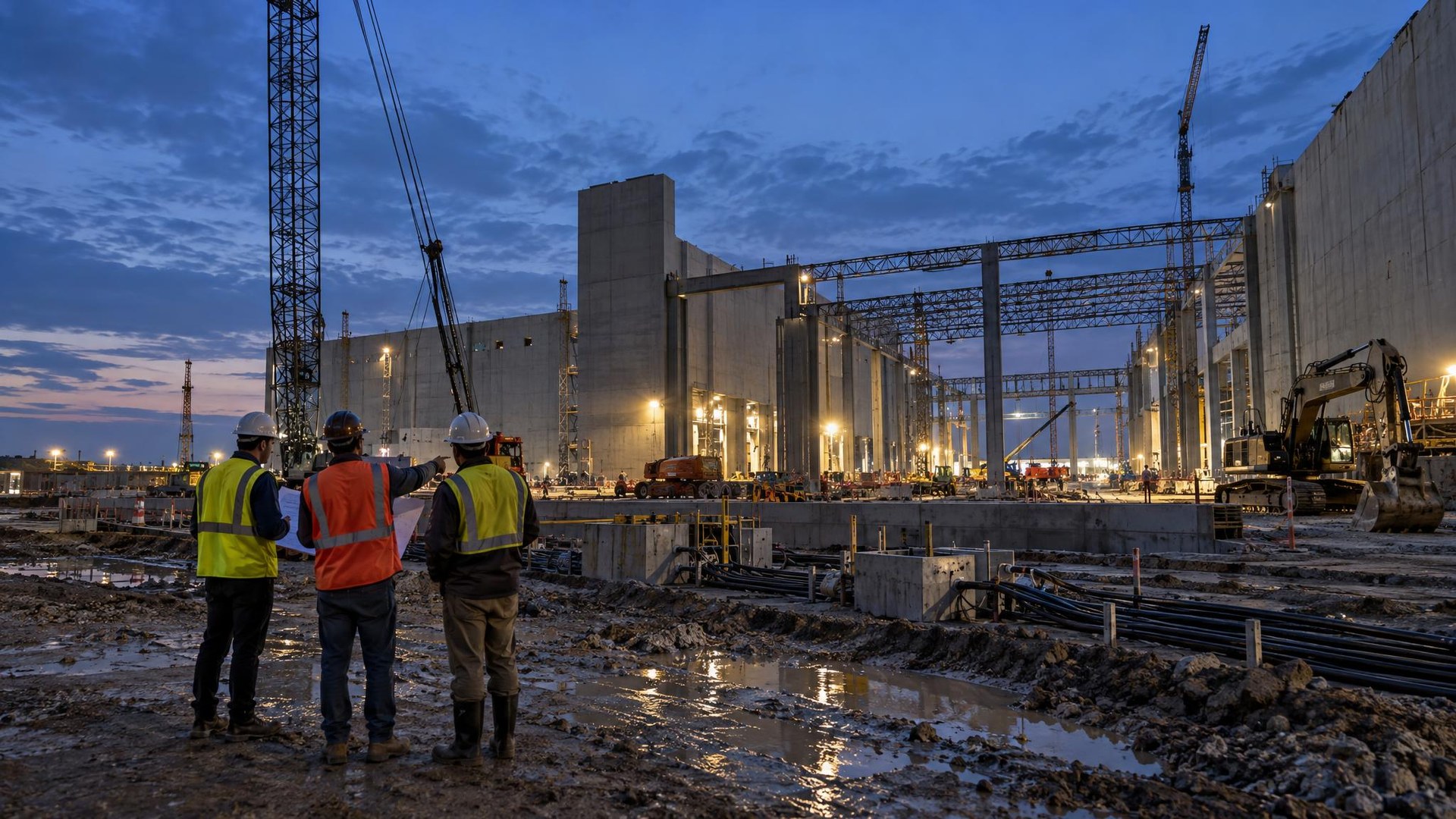
Source: Unite.AI
Marlowe announced on November 23, 2026 that it had raised $277 million in seed funding and detailed its plan to build and operate AI factories designed for inference workloads across multiple types of chips.
The institutional investors named include Accel, Bessemer, Altimeter, Atreides and Eclipse, alongside other venture firms and angel investors. Dan Lewis and Kutta Srinivasan founded Marlowe in May 2026 in collaboration with Lior Susan, Ido Susan and Chris Ré. Lewis is chief executive and Srinivasan is chief technology officer.
Why Marlowe Is Targeting Inference
Marlowe says inference usage is growing faster than supply, increasing costs and throttling use. Existing clusters are not optimized for inference, while financing, construction, permitting, regulation and power constraints are making new capacity harder to bring online. Data-center construction costs have risen 40% since 2020, intensifying the focus on getting more output from available power.
Marlowe positions its approach against the NVIDIA-centered AI factory, which integrated GPUs, CPUs, networking and software as the industry built larger training clusters. Its strategy addresses two limitations of general-purpose infrastructure: a single system cannot serve every training and inference workload efficiently, and dependence on one chipmaker concentrates supply-chain risk.
AMD, Amazon, Arm, Broadcom, Cerebras, Etched, Google and Meta are among the companies Marlowe identifies as developing chips intended to reduce inference costs or improve performance. Its premise is that a chip alone cannot produce tokens; facilities, networking and software are necessary for new silicon to reach its design potential.
Co-Designing the Infrastructure Stack
Marlowe plans to design, build and operate compute for specific inference workloads rather than supply identical configurations for every customer. Its variables include response time, CPU-to-GPU ratio, model size and architecture, input-to-output ratio, security and price sensitivity. A coding agent, a voice assistant that must respond in under a second and long-document analysis therefore present different infrastructure requirements.
Marlowe says optimizing data-center and inference layers independently can strand power and underutilize compute. Its alternative is to co-design the stack for each major workload class. The published design extends from chip selection and facility design to the software that manages servers, executes models and routes tokens.
The company projects that gains in networking, power management, AI-driven fleet operations and workload-specific inference optimization can compound into a 2–3x overall advantage in performance, availability, resiliency and cost. Its operating measures are tokens per watt, tokens per dollar and GPU uptime, tying that objective to energy use, customer economics and utilization.
Initial Sites and Chipmaker Deployments
Marlowe expects its first site to go live in December 2026 as it develops sites and works with several chipmakers. AMD senior vice president of AI Vamsi Boppana said AMD expects to deploy its Helios system with Marlowe in 2027, and highlighted Marlowe’s contributions to AMD’s software ecosystem.
Etched co-founder and president Rob Wachen said Etched expects to deploy its first inference clusters with Marlowe during 2026. Marlowe’s team also embeds with AI application companies to optimize their workloads for alternative silicon. Its target customers are AI application and platform companies seeking greater compute capacity at lower cost, and the company is hiring in data-center engineering, infrastructure software and hardware-software co-design.
Those deployments will test whether Marlowe’s coordinated design can make alternative silicon practical for customers while delivering the efficiency gains it has projected.