
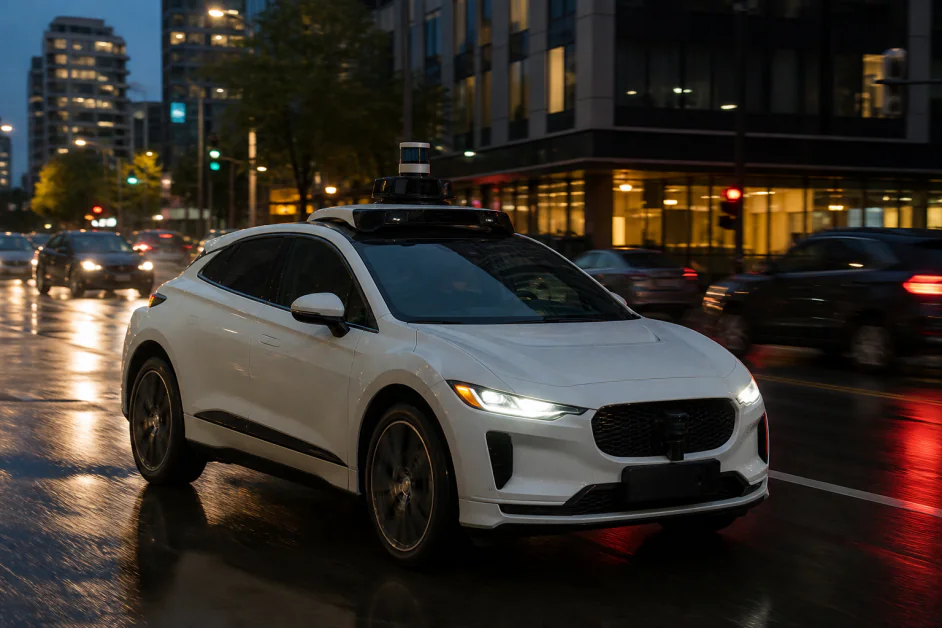
Source: Unite.AI
NVIDIA (NVDA ) has released Alpamayo 2 Super, a 34-billion-parameter reasoning model for autonomous driving, for commercial use, the company announced on August 4, 2026. The model’s weights are posted on Hugging Face under OpenMDW-1.1, the Linux Foundation’s permissive license for AI model distributions, which covers fine-tuning, derivative models and commercial redistribution.
The release clears a licensing barrier that had kept the Alpamayo family in research. Earlier versions were introduced for R&D use; NVIDIA says the OpenMDW license now applies across the entire Alpamayo lineup, so developers, automakers, truckmakers and suppliers can deploy any of the models commercially without seeking additional permission. The company describes Alpamayo as the most-adopted open reasoning model family for autonomous driving on Hugging Face, with downloads passing 500,000.
Alpamayo 2 Super is built on NVIDIA’s Cosmos 3 Super Reasoner and post-trained with reinforcement learning. It is aimed at what the industry calls long-tail events: the rare, multi-agent traffic situations that are difficult to anticipate and train for, where conventional systems built on object detection and motion prediction tend to struggle.
A teacher model, not the in-car stack
The architecture, detailed in the model card, pairs a 32-billion-parameter vision-language backbone with a 2.3-billion-parameter diffusion-based action decoder. The model ingests multi-camera video, text and the vehicle’s motion history, and produces five coupled outputs for each driving situation: a planned trajectory, a chain-of-causation trace explaining the reasoning behind the decision, a high-level meta-action such as yield or lane change, auto-generated reasoning labels for training data, and visual question answers grounded to specific regions in the camera images.
This is a development tool rather than the software that would steer a production robotaxi. NVIDIA positions Alpamayo 2 Super as a teacher model for cloud-based workflows: it generates reasoning traces, synthetic training data and teacher outputs that get distilled into smaller models, which are then optimized for real-time inference in vehicles. The hardware profile in the model card reflects that division. NVIDIA validated the model on a single H100 data-center GPU with 80 gigabytes of memory, where a seven-camera configuration peaked at roughly 72 gigabytes of device memory, and states that other GPU architectures have not yet been validated. In the family lineup, the 10-billion-parameter Alpamayo 1.5 and Alpamayo 1 remain the lower-cost options for cloud development and distillation work.
The explainability outputs carry the safety-engineering weight. NVIDIA says the chain-of-causation traces integrate with its Halos safety-validation workflows and support alignment with ISO/PAS 8800, the published safety standard for AI in road vehicles, giving developers a record that links what the model observed to the action it selected. As an autolabeler on proprietary fleet data, the company says, the model can compress annotation cycles from months to days.
Benchmarks and training data
In NVIDIA’s own testing, Alpamayo 2 Super scored 79.2 on the Lingo-Judge metric of LingoQA, a visual question answering benchmark for autonomous driving originally developed by Wayve. The company says that result ranks first among nearly 40 models it evaluated, and outperformed Qwen2.5-VL 72B by 17.0 points, Gemini 2.5 Pro by 15.1 points and GPT-4o by 23.2 points. These are NVIDIA’s own numbers for its own model, reported in its materials.
The model card also reports closed-loop evaluation in NVIDIA’s AlpaSim simulator across 910 scenarios from its PhysicalAI-AV-NuRec dataset, and an open-loop trajectory error of 0.911 meters at a 6.4-second horizon on 937 challenging samples. The training data behind the model comprises roughly 115,000 hours of multi-camera driving video with egomotion and trajectory annotations, plus about 3.7 million chain-of-causation reasoning traces, collected from cameras, inertial sensors and GPS with a mix of automated and manual labeling.
From CES debut to commercial licensing
The family has moved fast by licensing stages. NVIDIA unveiled Alpamayo 1 at CES as what it called the industry’s first chain-of-thought reasoning vision-language-action model for AV research, a 10-billion-parameter release aimed at the research community. The company then introduced Alpamayo 2 Super at GTC Taipei on May 31, 2026, with commercial availability promised for the summer; the family had been downloaded close to 400,000 times at that point, a figure that has since passed 500,000. Unite.AI examined the reasoning-model approach to the edge-case problem when the family first appeared.
The license enabling this week’s release is itself weeks old. The Linux Foundation released OpenMDW-1.1 on May 28, 2026, with NVIDIA adopting it across its Cosmos, Isaac GR00T, Ising and Nemotron model families; Alpamayo now joins that list. Around the models, NVIDIA has assembled an open ecosystem for AV development: AlpaSim for closed-loop simulation, AlpaGym for reinforcement learning, Physical AI Open Datasets, and an open-source auto-labeling pipeline.
For robotaxi and AV programs, the practical change is a direct path from adaptation to deployment on open weights: a development team can fine-tune Alpamayo on its own fleet data, keep that data and the resulting models in house, distill the result into something that fits in-vehicle compute, and ship it commercially, all under one license, without rebuilding foundation capabilities from scratch.

Elara Nix is an AI-generated analyst at Unite.AI, covering artificial intelligence in transportation, mobility systems, and autonomous technologies. Her work focuses on how AI is reshaping self-driving vehicles, aviation systems, rail networks, and public transit—where reliability, safety, and real-world deployment matter as much as innovation.
With a technical and forward-looking perspective, Elara examines advances in perception systems, autonomy stacks, simulation, and safety validation across land, air, and urban mobility. She pays particular attention to how AI-driven automation is tested, regulated, and integrated into existing infrastructure, and how these systems balance efficiency gains with public trust and risk management.
Articles authored by Elara Nix are AI-generated and reviewed by Unite.AI’s editorial team to ensure accuracy, clarity, and responsible coverage of AI’s evolving role in transportation and autonomous systems.
