
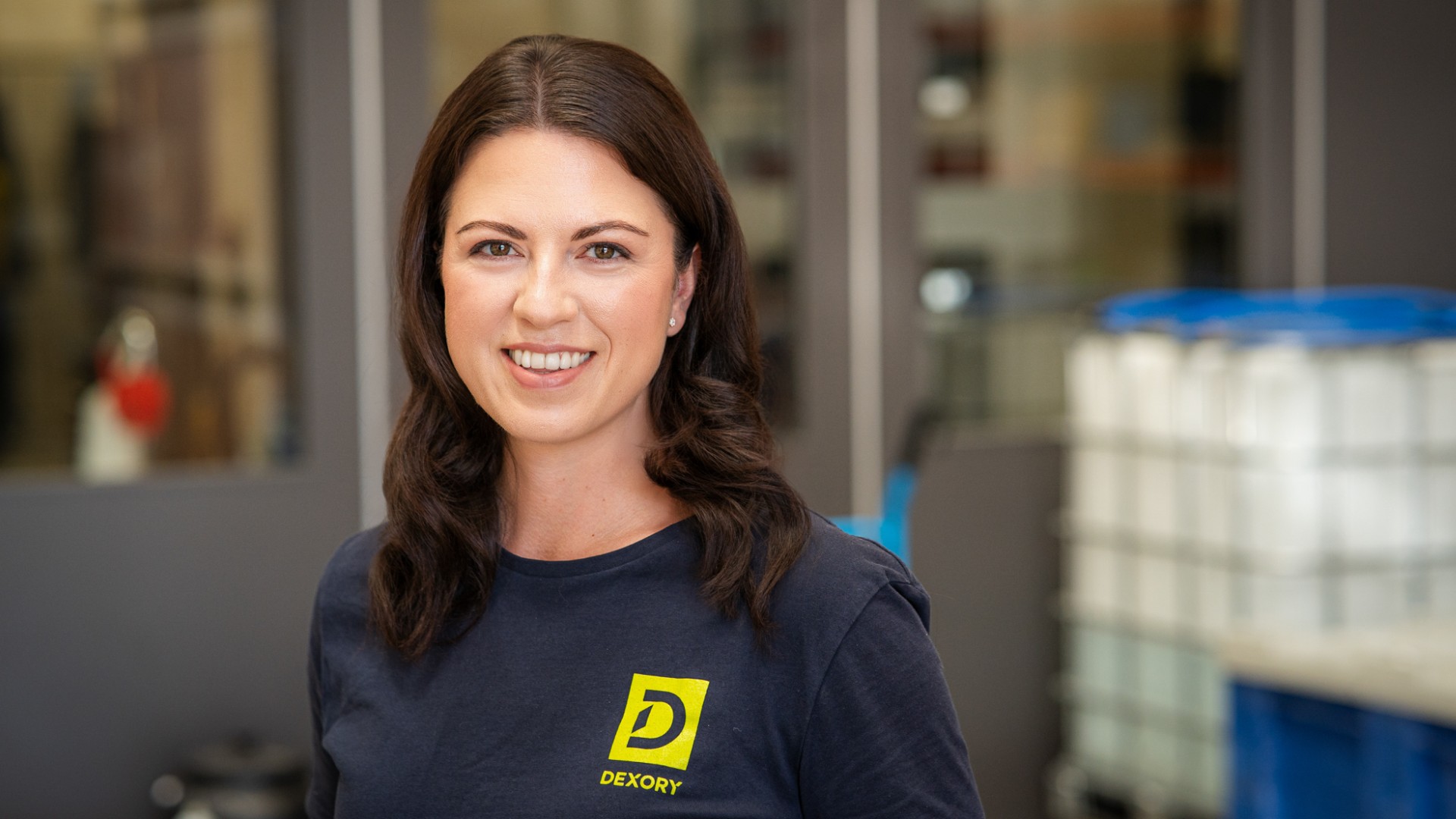
Source: Unite.AI
Oana Jinga, Co-Founder, Chief Commercial and Product Officer of Dexory, is an experienced technology and commercial leader with a background spanning robotics, retail technology, strategic partnerships, and product development. She co-founded the business originally known as BotsAndUs in 2015, serving as Chief Commercial Officer before taking on her current leadership role at Dexory. Alongside building the company, Jinga spent more than six years at Google, where she led retail partnerships in the UK and later oversaw strategic partnerships across the retail sector in EMEA. Earlier in her career, she held commercial, marketing, loyalty, and business development roles at O2 (Telefónica UK), as well as positions in marketing and public relations. She also served as UK Co-Lead of Xoogler.co, supporting a community of Google alumni, founders, investors, and startup operators.
Dexory is a UK-based robotics and AI company focused on bringing real-time intelligence to warehouse and logistics operations. Its DexoryView platform combines autonomous robots, computer vision, spatial AI, advanced analytics, and digital twin technology to continuously capture what is happening inside a warehouse and compare physical inventory with existing warehouse systems. Dexory says its robots can scan more than 10,000 locations per hour, creating a live digital representation that helps operators identify misplaced or damaged stock, monitor space utilisation, improve inventory accuracy, and uncover operational inefficiencies. The company positions its technology as an intelligence layer for increasingly autonomous warehouses, with deployments across Europe, Asia, and the United States and customers including major global logistics and industrial organizations.
You co-founded BotsAndUs in 2015 after building your career in commercial development and strategic partnerships at companies including O2 and Google. What did you and your co-founders observe in warehouse operations that convinced you to focus the business on logistics and ultimately evolve it into Dexory?
We saw that warehouses were becoming increasingly complex and automated, yet many operators still lacked an accurate, real-time view of what was physically happening on the warehouse floor. Inventory checks remained highly manual, time consuming and often disconnected from the systems making critical operational decisions. We realised robotics could bridge that gap by continuously capturing physical-world data and turning it into actionable intelligence.
For a warehouse operator considering Dexory, can you walk us through a typical deployment, from mapping the facility and scheduling autonomous scans to turning the collected data into actionable insights through DexoryView?
Deployment is designed to be fast and minimally disruptive – we’re talking 2-5 days with 1-2 of our team on sitemapping the site and building the digital twin so our autonomous robots can navigate the space and capture data without requiring major infrastructure changes. The robots then start running scheduled missions with an instant ROI of the solution, capturing data across the facility, which is processed and visualised in DexoryView. Operators can quickly identify discrepancies, investigate issues and make decisions based on an up-to-date digital representation of their warehouse.
Dexory’s autonomous mobile robot can scan full-height warehouse racking at heights of up to 18 metres. What engineering, sensing and artificial intelligence challenges had to be solved to operate accurately and safely at that scale?
The challenge is not simply reaching 18 metres, but capturing accurate, consistent data while moving autonomously through a busy warehouse environment. That requires combining robust mechanical engineering with localisation, sensing and computer vision that can perform reliably across different lighting conditions, rack configurations, and inventory types. Safety is fundamental, so the entire system is engineered to operate predictably alongside people and existing warehouse equipment.
Dexory’s robots have now scanned more than one billion warehouse locations worldwide. How does the scale and diversity of that real-world data improve the platform’s computer vision, anomaly detection and predictive capabilities?
We have indeed captured the largest data set of warehouse physical data which puts us in a very unique position to truly learn from it and build our own warehouse models. Scale matters because every warehouse introduces different layouts, products, packaging and operating conditions, creating an incredibly diverse real-world dataset. That breadth helps us continuously improve how the platform interprets warehouse environments, identifies anomalies, and distinguishes meaningful operational issues from noise. Over time, this creates the foundation for increasingly predictive intelligence, helping customers understand not just what is happening, but what is likely to happen next.
Warehouses often rely on warehouse management systems, enterprise resource planning platforms, and manual inventory records. How does Dexory reconcile discrepancies between what its robots physically observe and what those existing systems report?
Dexory provides an independent view of physical reality and compares that against what existing warehouse systems believe should be there. By integrating with systems such as WMS and ERP platforms, DexoryView can surface discrepancies between digital records and the physical warehouse so teams can investigate and resolve them quickly. We are not replacing those core systems but giving them a much more accurate and timelier source of real-world intelligence while also coordinating them.
Physical AI is often discussed in relation to humanoid robots, while Dexory has developed a highly specialised system for warehouse intelligence. Why are task-specific robots currently better suited to logistics, and where do you expect the biggest physical AI advances over the next decade?
In logistics, reliability, safety and measurable ROI matter more than building a robot that can do everything, which is why task-specific systems are so powerful today. Purpose-built robots can be optimised for a particular environment, making them more robust to the demands of real-world warehouse operations and better able to perform consistently under changing conditions. They can deliver value at scale without requiring warehouses to redesign their operations around the technology. Over the next decade, I expect physical AI to become increasingly autonomous and adaptive, with machines moving from executing predefined tasks to understanding environments and helping determine the best action to take.
Beyond making inventory counts faster, where are customers seeing the greatest operational value from real-time warehouse intelligence, whether through space utilisation, replenishment, safety, compliance or supply chain resilience?
The biggest value comes from giving operators visibility they simply could not achieve through periodic manual checks. Real-time warehouse intelligence can reveal underutilised space, inventory discrepancies, replenishment issues, and operational bottlenecks much earlier, allowing teams to act before they become costly problems. Ultimately, it enables warehouses to become more efficient and resilient because decisions are based on what is actually happening on the floor.
How far can warehouse intelligence progress from identifying issues such as misplaced inventory, damaged goods or unsafe storage conditions to recommending or autonomously initiating corrective actions?
We see warehouse intelligence evolving from visibility, to recommendation, and ultimately towards increasingly autonomous decision-making. The first step is understanding the physical environment accurately enough to identify an issue, then adding context from other systems to recommend the most effective response. As confidence in these systems grows, there will be opportunities for certain actions to be initiated automatically, while keeping people in control of higher-impact decisions.
As warehouses become increasingly automated, what roles will remain uniquely suited to people, and how should companies prepare employees to work effectively alongside robots, digital twins and AI-driven decision systems?
Automation should remove repetitive, physically demanding tasks and give people more time to focus on judgement, problem-solving, and managing exceptions. The most valuable roles will increasingly involve interpreting information, making complex decisions and improving how operations run rather than manually collecting data. Companies therefore need to invest in digital skills and help employees understand how to use AI and robotics as tools that augment their expertise.
You have advocated for making robotics more accessible to female talent. What practical changes are needed to attract more women to the sector?
We need to broaden both the routes into robotics and the perception of what a career in the industry looks like. The sector now spans engineering, software, data science, product design, operations, UX, commercial strategy, deployment and customer success, and this breadth needs to be communicated more clearly. Greater visibility of women and people from diverse backgrounds through case studies, speaking opportunities and public examples can help future talent see the many different career paths available, alongside earlier exposure and clearer entry routes into the field. However, attracting women is only part of the challenge, as companies must also build inclusive environments where women can progress into senior and leadership roles, ensuring the focus is not just on entry-level representation but on enabling long-term, sustainable careers in robotics.
Thank you for the great interview, readers who wish to learn more about this robotics company should visit Dexory.